Mardi - and A Voyage Thither, Vol. II
Eight Hundred Leagues on the Amazon
The Legacy of Cain
The Countess of Charny
The Mark of Cain
The Story of Greece: Told to Boys and Girls
Danger, Brotherhood, and Survival on the Harsh Coast of Newfoundland
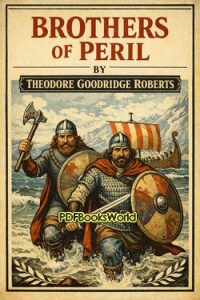
Stormy seas, frozen landscapes, and life-threatening adventures shape the dramatic world ofBrothers of Peril: A Story of Old Newfoundland. Set against the rugged coastline of Newfoundland, the novel captures the dangers and hardships faced by people living in one of the harshest maritime environments of the past.
The story combines adventure, survival, friendship, and courage while presenting a vivid portrait of coastal life during an earlier era. Through dangerous voyages and moments of personal sacrifice, the novel explores how loyalty and determination become essential when facing the power of nature.
The book remains an engaging example of classic adventure fiction centered on sea life and human endurance.
The Story and Its Setting
The novel takes place in old Newfoundland, a region known for its dangerous waters, fishing communities, and unpredictable weather. Life in this environment demands strength, cooperation, and constant vigilance.
The characters must face storms, accidents, and difficult decisions while struggling to survive in a world shaped by the sea.
The narrative includes:
Maritime adventure, dangerous voyages, icy conditions, family loyalty, rescue efforts, hardship, and acts of bravery.
The rugged setting plays a central role throughout the story and creates an atmosphere of constant tension.
Main Characters in the Novel
The Young Brothers– Courageous central characters whose loyalty and determination guide much of the story.Fishermen and Sailors– Experienced individuals who understand the dangers and traditions of life at sea.Family Members and Community Figures– Supportive characters who reflect the close-knit nature of Newfoundland communities.Natural Forces and Perils– Storms, freezing waters, and harsh weather become powerful challenges throughout the novel.
Major Themes in Brothers of Peril
Brotherhood and Loyalty– Strong family bonds and trust help the characters endure hardship.Survival Against Nature– The sea and weather constantly test human strength and endurance.Courage and Sacrifice– Characters often risk their own safety to protect others.Community and Cooperation– Survival frequently depends on teamwork and mutual support.Adventure and Exploration– The dangerous maritime setting creates suspense and excitement throughout the story.
Life in Old Newfoundland
One of the novel’s most interesting features is its portrayal of Newfoundland’s fishing communities and maritime culture. The story reflects a time when many people depended entirely on the sea for survival and livelihood.
Daily life involved physical labor, dangerous travel, and constant uncertainty caused by weather and ocean conditions.
The novel presents aspects of:
Fishing traditions, coastal survival, seafaring culture, harsh winters, isolated communities, and maritime resilience.
This strong historical atmosphere gives the story realism and emotional depth.
The Adventure Storytelling Style
The novel follows the classic adventure tradition with fast-moving events, dangerous situations, and dramatic rescues. Suspense builds naturally as the characters face increasingly difficult challenges.
The writing style focuses heavily on action, emotional tension, and survival rather than lengthy philosophical reflection.
This direct storytelling approach helps maintain excitement while making the novel accessible to a broad audience.
Why Modern Readers Still Enjoy the Story
Readers continue to appreciate classic sea adventures because they combine suspense, realism, and emotional intensity.Brothers of Perilcaptures the dangers of maritime life while also emphasizing human courage and perseverance.
Modern audiences often enjoy the novel because it:
Presents exciting survival situations, explores family loyalty, creates strong atmosphere, and highlights human resilience in difficult conditions.
The historical setting also gives readers insight into an earlier way of life shaped by the sea.
Interesting Facts About the Novel
Stories set in Newfoundland often focused on the dangerous realities of fishing and seafaring life because the region’s economy and communities depended heavily on the ocean. Adventure novels from this tradition frequently emphasized courage, teamwork, and survival in extreme natural conditions.
Final Thoughts
Brothers of Peril: A Story of Old Newfoundlandremains an exciting tale of adventure, loyalty, and survival in one of the world’s most challenging coastal environments. Through dangerous journeys and emotional struggles, the novel captures both the beauty and the danger of life connected to the sea.
For readers interested in maritime fiction, survival stories, and classic adventure literature, the book continues to offer an engaging and atmospheric reading experience.
Brothers of Peril
A Story of Old Newfoundland
By
Theodore Roberts
Author of
"Hemming, the Adventurer"
Illustrated by
H. C. Edwards
Boston
L. C. Page &
Company
Mdccccv
[Pg iv]
Copyright, 1905
By L. C. Page & Company
(INCORPORATED)
All rights reserved
Published June, 1905
Second Impression, March, 1908
COLONIAL PRESS
Electrotyped and Printed by C. H. Simonds & Co.
Boston, Mass., U.S.A.
[Pg v]
Preface
During the three centuries directly following John Cabot's discovery of Newfoundland, that unfortunate island was the sport of careless kings, selfish adventurers, and diligent pirates. While England, France, Spain, and Portugal were busy with courts and kings, and with spectacular battles, their fishermen and adventurers toiled together and fought together about the misty headlands of that far island. Fish, not glory, was their quest! Full cargoes, sweetly cured, was their desire—and let fame go hang!
The merchants of England undertook the guardianship of the "Newfounde Land." In greed, in valour, and in achievement they won their mastery. Their greed was a two-edged sword which cut all 'round. It hounded the aborigines; it bullied the men of France and Spain; it discouraged the settlement of the land by stout hearts of whatever nationality. It was the dream of those merchant adventurers of Devon to have the place remain
[Pg vi]
for ever nothing but a fishing-station. They faced the pirates, the foreign fishers, the would-be settlers, and the natural hardships with equal fortitude and insolence. When some philosopher dreamed of founding plantations in the king's name and to the glory of God, England, and himself, then would the greedy merchants slay or cripple the philosopher's dream in the very palace of the king. Ay, they were powerful enough at court, though so little remarked in the histories of the times! But, ever and anon, some gentleman adventurer, or humble fisherman from the ships, would escape their vigilance and strike a blow at the inscrutable wilderness.
The fishing admirals loom large in the history of the island. They were the hands and eyes of the wealthy merchants. The master of the first vessel to enter any harbour at the opening of the season was, for a greater or lesser period of time, admiral and judge of that harbour. It was his duty to parcel out anchorage, and land on which to dry fish, to each ship in the harbour; to see that no sailors from the fleet escaped into the woods; to discourage any visions of settlement which sight of the rugged forests might raise in the romantic heads of the gentlemen of the fleet; to see that all foreigners were hustled on every occasion, and to take the best of everything for himself. Needless
[Pg vii]
to say, it was a popular position with the hard-fisted skippers.
In the narratives of the early explorers frequent mention is made of the peaceful nature of the aborigines. At first they displayed unmistakable signs of friendly feeling. They were all willingness to trade with the loud-mouthed strangers from over the eastern horizon. They helped at the fishing, and at the hunting of seals and caribou. They bartered priceless pelts for iron hatchets and glass trinkets. Later, however, we read of treachery and murder on the parts of both the visitors and the natives. The itch of slave-dealing led some of the more daring shipmasters and adventurers to capture, and carry back to England, Beothic braves and maidens. Many of the kidnapped savages were kindly treated and made companions of by English noblemen and gentlefolk. It is recorded that more than one Beothic brave sported a sword at his hip in fashionable places of London Town before Death cut the silken bonds of his motley captivity.
Master John Guy, an alderman of Bristol, who obtained a Royal Charter in 1610, to settle and develop Newfoundland, wrote of the Beothics as a kindly and mild-mannered race. Of their physical characteristics he says: "They are of middle size, broad-chested, and very erect.... Their
[Pg viii]
hair is diverse, some black, some brown, and some yellow."
As to the ultimate fate of the Beothics there are several suppositions. An aged Micmac squaw, who lives on Hall's Bay, Notre Dame Bay, says that her father, in his youth, knew the last of the Beothics. At that time—something over a hundred years ago—the race numbered between one and two hundred souls. They made periodical excursions to the salt water to fish, and to trade with a few friendly whites and Nova Scotian Micmacs. But, for the most part, they avoided the settlements. They had reason enough for so doing, for many of the settlers considered a lurking Beothic as fair a target for his buckshot as a bear or caribou. One November day a party of Micmac hunters tried to follow the remnant of the broken race on their return trip to the great wilderness of the interior. The trail was lost in a fall of snow on the night of the first day of the journey. And there, with the obliterated trail, ends the world's knowledge of the original inhabitants of Newfoundland; save of one woman of the race named Mary March, who died, a self-ordained fugitive about the outskirts of civilization, some ninety years ago.
To-day there are a few bones in the museum at St. John's. One hears stories of grassy circles
[Pg ix]
beside the lakes and rivers, where wigwams once stood. Flint knives and arrow-heads are brought to light with the turning of the farmer's furrow. But the language of the lost tribe is forgotten, and the history of it is unrecorded.
In the following tale I have drawn the wilderness of that far time in the likeness of the wilderness as I knew it, and loved it, a few short years ago. The seasons bring their oft-repeated changes to brown barren, shaggy wood, and empurpled hill; but the centuries pass and leave no mark. I have dared to resurrect an extinct tribe for the purposes of fiction. I have drawn inspiration from the spirit of history rather than the letter! But the heart of the wilderness, and the hearts of men and women, I have pictured, in this romance of olden time, as I know them to-day.
T. R.
November, 1904.
[Pg xi]
MAGGIE STONE TAKES MUCH UPON HERSELF Shortly before midnight, Tom Bent went quietly about the task of waking both watches and the Beothics. The three boats from Fort Beatrix were manned, with the muff…
WHILE THE SPARS ARE SCRAPED It is difficult to imagine the feelings of the skippers and crews of the good ship Plover and Mary and Joyce , when the gray light of dawn disclosed the fact that the Hear…

THE FIRST STAGE OF THE HOMEWARD VOYAGE IS BRAVELY ACCOMPLISHED At nine o'clock of the morning of the twenty-second day of June, the bow of the Heart of the West was towed around and pointed down…
IN THE MERRY CITY The Heart of the West was boarded by a lieutenant of infantry, inside the Narrows, and was quickly piloted to a berth on the north side of the great harbour, where her anchors were …
PIERRE D'ANTONS SIGNALS HIS OLD COMRADES, AND AGAIN PUTS TO SEA The wilderness, that grim thing of naked rock, brown barren, gray marsh, and black wood, which had claimed the mad baronet so surel…
THE BRIDEGROOM ATTENDS TO OTHER MATTERS THAN LOVE The dainty bride leaned on her husband's arm, and together they looked back and waved farewell. Flags answered them from the battery above the cl…
OVER THE SIDE With a fearful grinding of timbers and rattling of spars, the merchantman's larboard bow scraped along the enemy's side. Boarding-irons were thrown across from the forecastle-d…
THE MOTHER Dame Kingswell, the widow of that good merchant of Bristol whom Queen Elizabeth had knighted in her latter days, sat in her chamber and looked down upon a pleasant garden beneath the window…

A Courageous Mission Across the Vast Russian Empire Michael StrogoffbyJules Ver…
Read more

A Mysterious Influence That Changes Everything The Master SpiritbySir William M…
Read more

A Quiet Community Hides a Dangerous Secret The North Shore MysterybyHenry Fletc…
Read more